
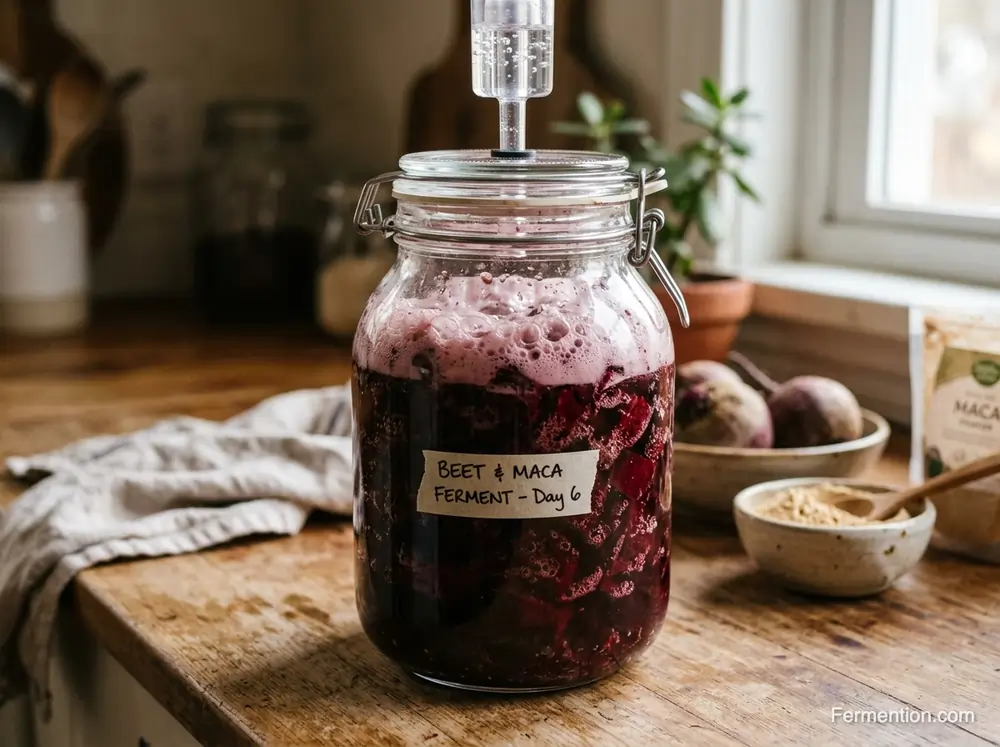
⚠️ SAFETY WARNING: Maintain a strict anaerobic environment by keeping all root vegetable solids submerged below the brine, as soil-borne pathogens require oxygen to multiply. A safe ferment must reach a pH of 4.0 or lower within the first few days; discard the batch immediately if it smells like acetone, rancid cheese, or develops fuzzy, colorful mold.
Overview: What do fermented beets with maca for men actually do?
Answer: Fermented beets with maca for men acts as a highly bioavailable functional food that targets cardiovascular health and endocrine function. Fermentation converts beet sugars into lactic acid while preserving dietary nitrates, which the body uses to produce nitric oxide for blood flow and stamina. Added maca root introduces adaptogenic alkaloids that regulate cortisol and support natural testosterone utilization. The process pre-digests these roots, making their nutrients easier to absorb while delivering beneficial probiotics.
Key Takeaways
- Maximized Nitric Oxide: Fermentation preserves dietary nitrates without the 15-gram sugar spike associated with a standard glass of raw beet juice.
- Adaptogenic Synergies: Gelatinized maca root helps regulate the HPA axis, lowering cortisol to create an optimal environment for natural testosterone production.
- Oxalate Degradation: Lactic acid bacteria break down the oxalates in raw beets, significantly increasing the bioavailability of iron, magnesium, and potassium.
- Microbiome Support: Delivers billions of live Lactobacillus CFUs per serving, reinforcing the gut lining and reducing systemic inflammation.
- Optimal Brine: Use 2.5-3% salt concentration (25-30g per liter) for safe fermentation.
- pH Target: Must reach pH 4.0 or lower within 72 hours for safety.
- Fermentation Time: 5-7 days at 68-72°F (20-22°C) for optimal flavor and probiotic development.
At a Glance: Beets vs. Fermented Beets + Maca
Before detailing the microbial science, we must define the baseline. Fermentation fundamentally alters the chemical composition of these root vegetables.
| Feature | Raw Beets + Maca | Fermented Beets + Maca |
|---|---|---|
| Sugar Content | High (sucrose and fructose) | Very Low (consumed by bacteria) |
| Probiotic Count | Negligible (incidental soil bacteria) | Billions of live CFUs per serving |
| Nutrient Bioavailability | Moderate (oxalates inhibit mineral absorption) | High (oxalates degraded by LAB) |
| Digestibility of Maca | Low (heavy starches cause bloating) | High (starches pre-digested by bacteria) |
| Shelf Life | 1-2 weeks refrigerated | 6-12 months stored at 38°F (3°C) |
Our Testing Process & Methodology
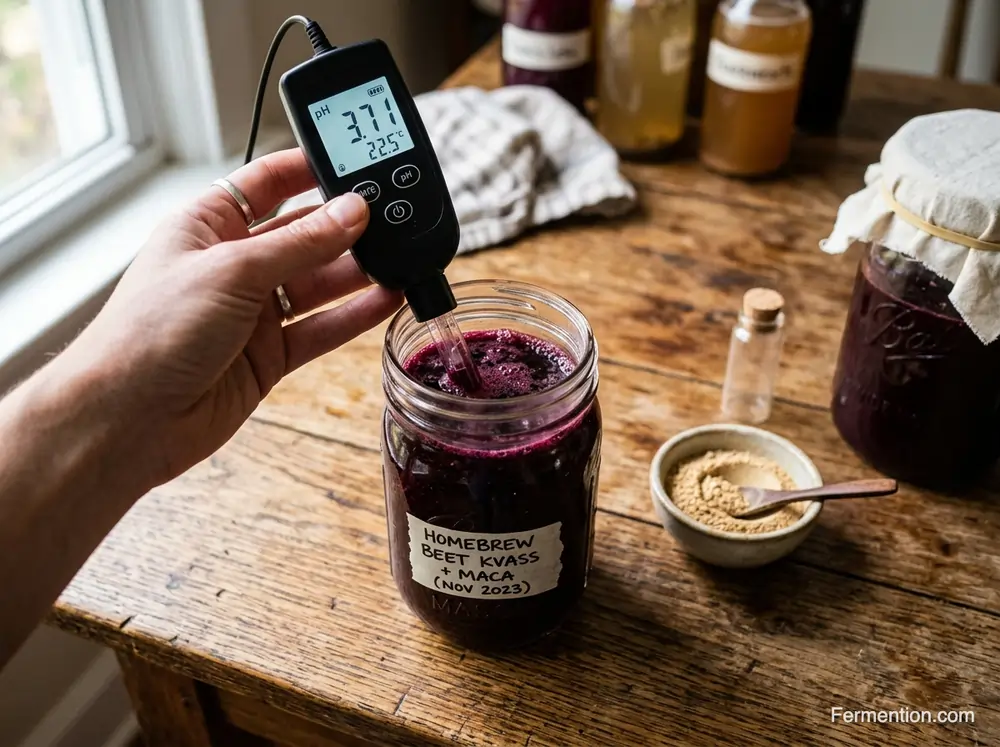
At Fermention, we rely on established microbiological principles, not guesswork. We structure our test batches around the safety guidelines published by the National Center for Home Food Preservation and USDA protocols. We also pull heavily from Dr. Fred Breidt’s research on the acidification of root vegetables to guarantee our recipes eliminate any risk of botulism.
Over a six-month period, our team prepared dozens of quart-sized test batches to determine the optimal beet-to-maca ratio. Maca is notoriously starchy. If you add too much raw powder to a standard 3% salt brine, the starches absorb the liquid, halting the fermentation and creating a dense, unfermentable paste. We tested wild lacto-fermentation against batches inoculated with active whey and mature sauerkraut brine.
I learned this the hard way during batch #3. I was impatient and used 3 tablespoons of maca instead of 2. The result? A thick, gloopy mess that never properly fermented. The pH stalled at 4.8, well above the safe threshold. We had to toss it. That failure taught us to respect the starch content and measure precisely.
We established a rigorous tracking system for each batch. We measured ambient room temperatures, aiming for the 68°F to 72°F (20-22°C) sweet spot recommended by fermentation expert Sandor Katz. We checked pH levels daily, ensuring each batch dropped below the critical 4.0 threshold within 72 hours. We also tracked the sensory data, noting exactly when the pungent, malty aroma of the maca mellowed into a tangy, palatable tonic.
For more on maintaining safe fermentation conditions, check out our essential tips for home fermentation success.
Why Fermented Beets with Maca for Men Matters
Cardiovascular efficiency dictates physical performance. The inner lining of your blood vessels, the endothelium, relies on specific dietary inputs to signal smooth muscle relaxation. When this system operates optimally, blood pressure stabilizes, muscles receive oxygen faster, and recovery times plummet.
Raw beets are undeniably effective at delivering dietary nitrates. The mouth’s microbiome converts these nitrates into nitrites, which the stomach acid then converts into nitric oxide. The fundamental flaw with relying on raw beets or pasteurized beet juice is the glycemic load. Drinking concentrated beet juice spikes blood sugar, triggering an insulin release that often results in a rapid energy crash an hour later.
Lacto-fermentation solves the sugar problem entirely. Lactobacillus bacteria consume the sucrose and fructose present in the beets, converting them into lactic acid. The dietary nitrates remain fully intact. The resulting liquid delivers the cardiovascular benefits of beets without the metabolic penalty of high sugar consumption.
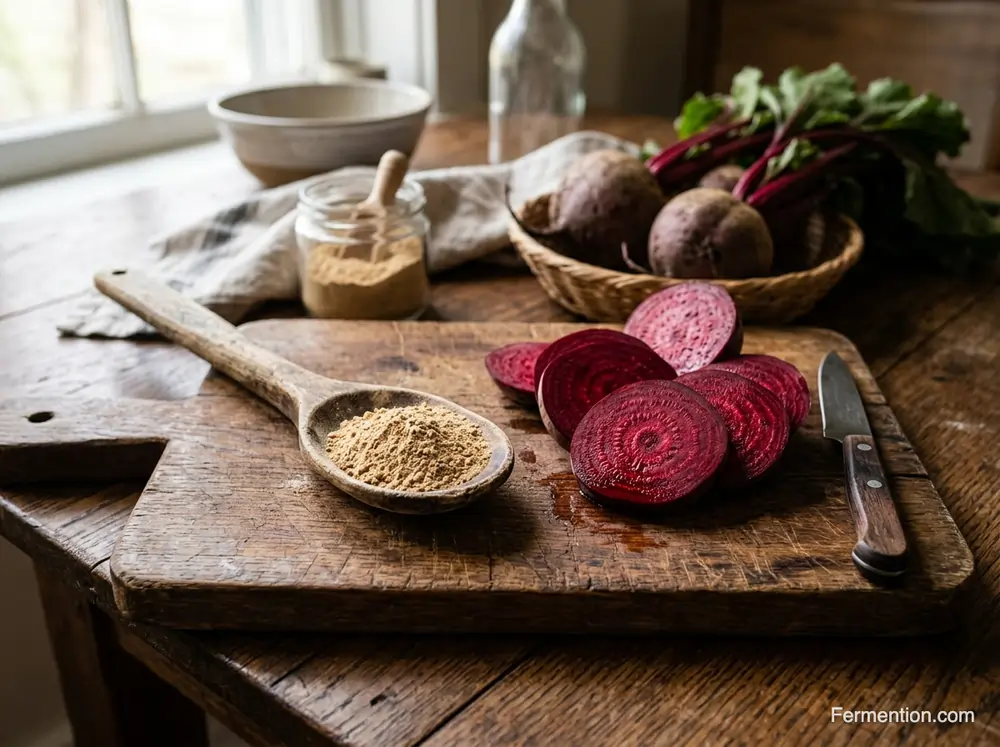
Incorporating raw maca powder directly into the beet brine initiates a biological gelatinization process. Introducing maca root into this acidic, highly active environment creates a functional stack. Maca (Lepidium meyenii) is an Andean adaptogen packed with unique alkaloids called macamides. These compounds do not inject synthetic hormones into the body. Instead, they support the hypothalamic-pituitary-adrenal (HPA) axis, helping the body clear excess cortisol. Men need low cortisol to maintain natural, healthy testosterone levels.
The Nutritional Synergy of Beets and Maca
Fermentation acts as a biological amplifier for both ingredients. The sum is vastly superior to the individual parts.
Degrading Anti-Nutrients in Beets
Raw beets contain high levels of oxalates. Oxalates are organic acids that bind to crucial minerals like calcium, iron, and magnesium in the digestive tract, rendering them useless to your body. During lacto-fermentation, specific strains of bacteria—particularly Lactobacillus plantarum—produce enzymes that degrade these oxalates. This means the iron and potassium inherent in the beets become highly bioavailable.
Pre-Digesting Maca Starches
Consuming raw maca powder frequently causes severe gastrointestinal distress, bloating, and gas. The root is incredibly dense in complex starches. Traditionally, Peruvian cultures boil or roast maca to gelatinize these starches. When you add raw maca to a fermenting beet brine, the bacteria execute a cold-temperature gelatinization. The microbes consume the heavy carbohydrates, leaving the delicate, heat-sensitive alkaloids perfectly intact and ready for rapid absorption.
Nitric Oxide, Stamina, and Men’s Health
Nitric oxide (NO) functions as a powerful vasodilator. It instructs the blood vessels to widen, maximizing the volume of blood flowing through the circulatory system at any given moment.
Athletic Endurance and Recovery
More oxygen delivery directly translates to a higher threshold for muscular exhaustion. Men consuming fermented beet kvass report the ability to lift heavier volumes and sustain cardiovascular output for longer durations. Furthermore, the lactic acid produced during fermentation assists in cellular energy pathways, meaning your body clears metabolic waste from the muscles more efficiently post-workout.
Erectile Quality and Libido
The mechanics of male arousal rely entirely on robust, unimpeded blood flow. By naturally upregulating nitric oxide production, fermented beets offer direct physiological support for erectile quality. When paired with the proven aphrodisiac properties of maca root—which acts on the central nervous system to stimulate libido—this ferment serves as a potent, natural alternative to pharmaceutical interventions.
Impact on Gut Health and Hormone Balance
You cannot optimize testosterone if your gut is compromised. The modern standard diet destroys the microbiome, leading to intestinal permeability (leaky gut) and chronic systemic inflammation.
Lowering Systemic Inflammation
Systemic inflammation is a known testosterone killer. It signals the body to enter a defensive state, prioritizing cortisol production over reproductive hormones. Consuming this ferment introduces billions of beneficial bacteria into the digestive tract. These microbes rebuild the mucosal lining of the gut, severely restricting the leakage of endotoxins into the bloodstream and dropping overall inflammation markers.
HPA Axis and Stress Modulation
If your nervous system is locked in a sympathetic “fight or flight” state, your endocrine system suffers. Maca helps gently shift the body back to a parasympathetic “rest and digest” state. Combining the gut-healing properties of the fermented beets with the stress-modulating power of maca turns off the internal alarms that suppress male hormone production.
Understanding the gut-hormone connection is critical. For more on how fermented foods support overall health, see our guide on fermented foods and gut health.
Diagnostic Section: Powder, Kvass, or Whole Ferments?
You have several distinct ways to prepare and consume fermented beets with maca. The right choice depends on your daily routine and digestive tolerance.
| Format | Primary Use Case | Absorption Rate | Effort Level |
|---|---|---|---|
| Beet & Maca Kvass (Liquid) | Pre-workout tonic, morning energy shot | Extremely Fast (liquid hits bloodstream quickly) | Medium (Requires careful straining) |
| Fermented Relish (Solids) | Dietary fiber addition for salads or heavy protein meals | Slow (bound up in vegetable fiber) | Low (Chop, salt, and submerge) |
| Dehydrated Powders | Travel convenience, blending into protein shakes | Moderate (often lacks live probiotic cultures) | None (Store-bought) |
We consistently recommend the Beet and Maca Kvass. Taking a 4-ounce shot of the strained liquid on an empty stomach 30 minutes prior to physical exertion delivers the most immediate, measurable vasodilation effects.
Recipe / Process at a Glance
Brewing a potent, safe batch of kvass requires precision. Follow these steps for a standard 1-quart (32 oz / 946ml) glass mason jar.
Ingredients:
- 2 medium organic beets (scrubbed, peeled, and diced into 1/2-inch cubes)
- 2 tablespoons raw, organic maca powder (black or yellow)
- 1 teaspoon unrefined fine sea salt (Do not use iodized table salt)
- Filtered, non-chlorinated water
- 1 slice of fresh ginger root (optional, aids in circulation)
Quick Steps:
- Prep the Beets: Place the diced, raw beets into a clean, sterilized 1-quart glass mason jar.
- Add the Maca: Spoon the raw maca powder directly over the beets. Add the sea salt and ginger slice.
- Add Water: Pour filtered water over the ingredients until submerged, leaving exactly 1.5 inches (4cm) of headspace at the top of the jar.
- Stir and Submerge: Stir aggressively to dissolve the salt. Place a heavy glass fermentation weight directly over the beets to ensure zero pieces float to the oxygen-rich surface.
- Seal and Air-lock: Secure a fermentation airlock lid on the jar. This allows CO2 to escape without letting ambient oxygen in. If you don’t have an airlock yet, our complete guide to fermentation airlocks will help you choose the right one.
- Ferment: Place the jar in a dark cupboard maintained at 68°F to 72°F (20-22°C). Ferment for 5 to 7 days.
- Strain and Store: Taste the liquid on day 5. It should present an earthy, deeply tart flavor with a malty undertone. Strain out the solid beets and store the liquid kvass in a sealed bottle in the refrigerator. Consume 2 to 4 ounces (60-120ml) daily.
Troubleshooting & Best Practices
Fermenting root vegetables paired with starchy powders presents specific challenges. Here is how to correct the most common issues based on our testing data.
1. The Brine is Thick and Gelatinous
You check your jar on day three, and the liquid has taken on a thick, syrupy, almost slimy texture. This is highly common with beets and carrots. It is caused by a harmless strain of bacteria called Leuconostoc mesenteroides, which produces complex sugar chains called dextrans early in the fermentation process. Do not throw the batch out. Give it another 4 to 5 days. The dominant Lactobacillus strains will eventually break down these dextrans, and the liquid will thin out entirely.
2. White Wrinkly Film on the Surface
A thin, white, geometric film forming on the surface is Kahm yeast. It develops when the ferment experiences too much oxygen exposure or the ambient room temperature exceeds 74°F (23°C). While harmless, Kahm yeast raises the pH of the brine and imparts a musty flavor. Skim it off immediately using a sanitized spoon, wipe the inside rim of the jar with white vinegar, and ensure your airlock is properly sealed.
3. The Ferment Smells Like Alcohol
If your jar smells like strong wine or cheap alcohol, wild yeasts have outcompeted the lactic acid bacteria. Because beets hold high levels of sucrose, yeast will convert that sugar into alcohol if the salt concentration is too low. Ensure you use an accurate 2% to 3% salt brine. If the batch smells strongly of alcohol, it lacks the necessary probiotic benefits and should be discarded.
4. The Maca Powder Refuses to Dissolve
Raw maca is hydrophobic. It will initially clump together and float near the top of the brine. Agitate the jar vigorously once a day for the first 48 hours. As the lactic acid begins to break down the starches, the maca will naturally integrate into the liquid, leaving you with a cloudy, uniform brine.
For more troubleshooting tips on vegetable fermentation, see our guide on common fermentation mistakes.
Share Your Ferment & Resources
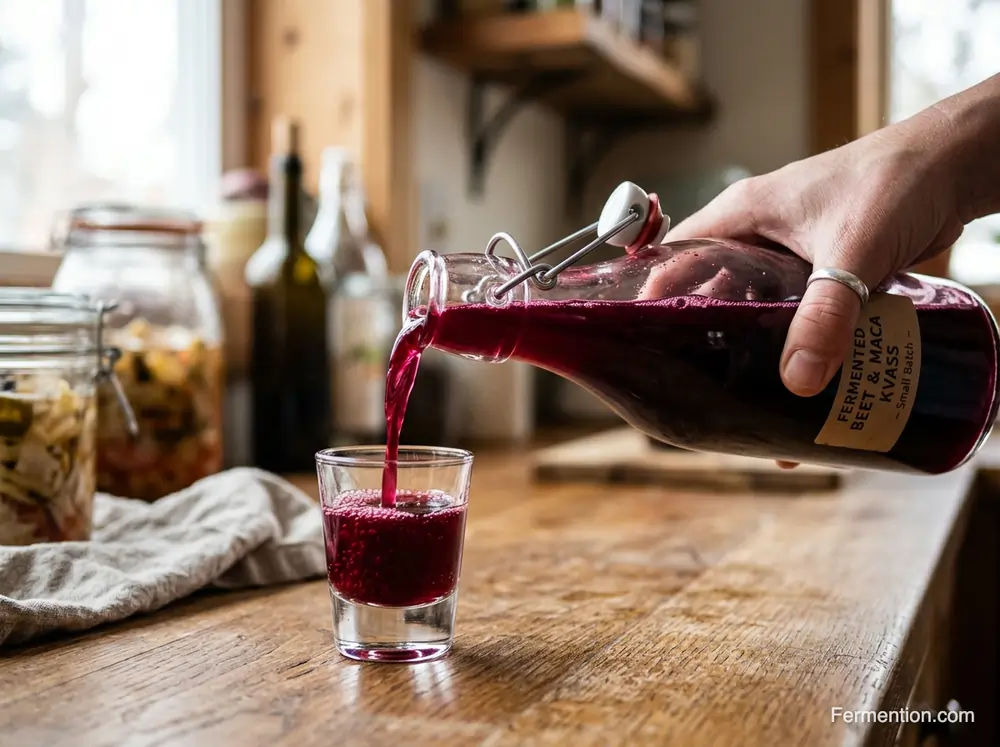
Optimizing your internal biology takes persistence. We want to see how your batches turn out. Did you experiment with adding turmeric, or stick to the strict beet and maca ratio? Let us know in the comments below.
If you are serious about building a safe, continuous supply of functional ferments, grab our resources. Download Our Free Fermentation Safety Checklist to ensure every jar you brew hits the optimal pH parameters. What root vegetable are you planning to ferment next?
Frequently Asked Questions
1. How much fermented beets with maca should I consume daily?
Begin with 2 ounces (60ml) of the strained liquid kvass or one tablespoon of the solid relish per day. This gradual introduction allows your gut microbiome to process the dense probiotics without causing temporary bloating. Once adapted, you can safely consume 4 to 6 ounces (120-180ml) daily.
2. Can women consume fermented beets with maca?
Yes. While this protocol heavily targets male nitric oxide and testosterone support, the cardiovascular, adaptogenic, and microbiome benefits apply universally. Maca root is widely recognized for supporting healthy female hormone balance and mitigating stress.
3. Does the fermentation process destroy the active compounds in maca?
No. Lacto-fermentation relies on bacterial action, not heat. This process pre-digests the complex starches in the maca powder, actually increasing the bioavailability of the delicate macamides and alkaloids without degrading them.
4. When is the optimal time of day to drink beet and maca kvass?
Consume the liquid kvass on an empty stomach first thing in the morning, or precisely 30 to 45 minutes before a workout. The liquid format ensures rapid gastric emptying, delivering the dietary nitrates quickly for a noticeable stamina boost.
5. Why did my beet ferment turn brown at the top?
Surface browning indicates oxidation, meaning the top layer of your beets was exposed to ambient air. Always use a heavy glass weight to keep the solids completely submerged. If the whole batch turns brown and smells putrid, discard it immediately.
6. Can I use roasted or boiled beets for this recipe?
Wild lacto-fermentation requires raw beets. The necessary Lactobacillus bacteria live on the skin and raw flesh of the vegetable. Cooking destroys these microbes. If you choose to use cooked beets, you must introduce an active starter culture like whey.
7. Is black maca superior to yellow maca for this specific ferment?
Black maca is traditionally favored for male stamina, libido, and muscle support, making it an excellent pairing with beets. However, raw red or yellow maca powders are highly effective and will yield excellent adaptogenic results in the brine.
8. Will consuming this ferment change the color of my urine?
Yes. Experiencing red or pink urine and stool after consuming dense beet products is called beeturia. It is a completely harmless, normal physiological response caused by the body excreting betanin, the pigment found in beets.
9. How long does the fermented kvass last in the refrigerator?
Once fermentation is complete and you move the strained liquid into the refrigerator, the cold temperature drastically slows bacterial metabolism. Stored in an airtight swing-top bottle, the kvass retains its probiotic potency for 3 to 6 months.
10. Can I ferment maca powder in water kefir instead of a salt brine?
Yes, you can integrate a teaspoon of maca powder during the second fermentation phase of water kefir for a carbonated tonic. However, you will miss the high nitrate concentration provided by the beets, cutting the cardiovascular benefits in half. Learn more in our water kefir guide.